
 0800 170 1260 | 0161 877 1260
  MENU
MENU


Whether you are talking about an attic, a storage unit, or even under the stairs, everyone has experienced the situation where you are standing in the middle of the room, surrounded by a load of cardboard boxes, searching for a wedding certificate, an old tax document, or a birth certificate. Ninety minutes later, with sweat dripping off your brow, you are frustrated, stressed and still no further forward, and haven’t found anything you set out to find.
Set it and forget it ” is a recipe for disaster.
 At MCR Storage, we have assisted and advised our customers for over twenty years. And we have seen numerous instances where customers have pulled their hair out desperately searching for that one vital document because they had a set it and forget it mentality, which is the antithesis of an organisational system. Simply put, if you treat your storage unit like a junk drawer, it will behave like one. However, with a strategic approach, your unit can function like a high-end warehouse, where placing your hands on a specific item takes seconds, not hours.
This article has been designed as the ultimate guide to organising your self-storage unit so you can find anything you need inside five minutes.
The Golden Rule: Inventory Before You Pack
 It’s a simple fact that it is impossible to organise anything which you haven’t accounted for.
The one irrefutable rule of self-storage organisation is that before a single box enters the storage unit, you need to implement a Master Inventory List. The good news is that this doesn’t need to be complicated or expensive. Essentially, you need to follow three rules.
Rule 1 – Digital is king. Use a spreadsheet (Google Sheets or Excel)
Rule 2 – Use a Numbering System – Assign every box a unique number, so rather than writing plates on the box, write “Box Number 14”
Rule 3 – The Detail: In your master list, record exactly what is in Box Number 14 (e.g., blender, blue coffee mugs, silverware tray).
The main benefit of this system is that you don’t have to open ten different boxes labelled “Kitchen” to find that blender. You can simply search the Google sheet on your phone for the word “Blender”, and that will direct you straight to the correct Box 14.
Consistency is King: Uniform Box Sizes
 Whilst there are certainly cost benefits to getting some free cardboard boxes from your local grocery store, the reality is that different sizes and shapes of boxes are unstable when it comes to stacking and also waste vertical space.
Standardise: Invest in high-quality, uniform plastic bins or heavy-duty cardboard boxes.
Plastic vs Cardboard: Clear plastic bins are the ultimate choice for self-storage units. They allow you to see the contents at a glance and offer better protection against moisture, pests, and dust.
Stackability: Uniform boxes stack securely, allowing you to utilise the full height of your unit without the “Leaning Tower of Pisa” effect.
Create a “Human-Centric” Layout
Most people pack a storage unit from the back to the front, filling every square inch. Whilst this might seem like a logical plan, with the aim of utilising all of the available space, the reality is that it creates a “dead zone” in the back that is impossible to reach. A better solution is to design your unit like a library.
The Centre Aisle
Never pack your unit 100 per cent fully; if you do not have the requisite space to leave any gaps, it might be a better option to talk to the team at MCR Storage about getting a slightly larger unit. Leave a centre aisle or a “T-shape” walkway. You should be able to walk to the back of the unit without having to climb over anything.
The Perimeter Strategy
Place your heaviest items and shelving units along the walls. Keeping the centre clear makes it significantly easier to manoeuvre and pull boxes from the bottom of a stack.
Frequently Accessed vs Long-Term
The Front of Your Self-Storage Unit: Seasonal items (holiday decorations, camping gear), sports equipment, and business inventory.
Back of the unit: Family heirlooms, old tax records, and furniture you are unlikely to need for years.
The Map: Your Secret Weapon
Once your self-storage unit is packed, draw a simple map. It doesn’t need to be an architectural masterpiece—a hand-drawn sketch on a piece of paper taped to the inside of the door will do.
Zone A: Left wall (Furniture and Appliances).
Zone B: Back wall (Archives and Memories).
Zone C: Right wall (Shelving Units 1-4).
When you enter the unit, the map tells you exactly which area of the storage unit to visit.
Protect Your Property
 It is absolutely pointless if, by following these systems, you can find your items quickly, but they have been ruined by mildew or pests. A 5-minute search becomes a 5-hour cleanup if a box has disintegrated.
Pallets: Never place cardboard boxes directly on the concrete floor. Concrete can “sweat,” leading to moisture damage. Use wooden pallets to keep items two inches off the ground.
Climate Control: If you are storing electronics, wood furniture, or photos, a climate-controlled unit is non-negotiable.
Moisture Absorbers: Place silica gel packets or moisture-absorbing canisters in the corners of the unit.
The “Five-Minute” Maintenance Rule
Organisation is a process, not a one-time event. To maintain your 5-minute retrieval guarantee, follow these rules:
The One-In, One-Out Rule: If you bring a new box in, update your inventory list immediately.
Don’t “Drop and Run”: When returning items to the unit, put them back in their designated spot. Resisting the urge to leave things just inside the door for convenience is the difference between a system and chaos.
Keep a “Go-Bag” at the Front: Keep a small kit by the door containing a flashlight, a box cutter, a permanent marker, and a spare roll of packing tape.
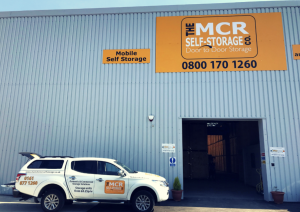 Hopefully, if you follow these tips properly, you will ensure that your self-storage facility runs efficiently and effectively and is an asset to your business or home.
If you have any questions about self-storage, want to visit our facilities for a walk around or need to get prices and availability of our self-storage units, please call our friendly customer service team on 0800 170 1260